How Platform Updates Transform Incentive Structures and Terminology on Digital Poker Platforms
Avery Weber · Oct 1, 2026

How Platform Updates Transform Incentive Structures and Terminology on Digital Poker Platforms
Platform updates in digital poker environments have introduced measurable shifts in how players engage with promotional incentives and adopt revised terminology during gameplay sessions. Data from industry tracking services indicates that major operators rolled out interface changes throughout 2025 and into 2026 that altered bonus display formats along with reward calculation methods. These modifications prompted players to adjust their selection criteria for tables and revise the language they use when discussing rake structures and loyalty programs.
Mechanics Behind Recent Platform Adjustments
Operators implemented new algorithms that recalculate bonus eligibility based on real-time session data rather than fixed thresholds, and players responded by tracking metrics such as average pot size and hand volume more closely. Research from the Alcohol and Gaming Commission of Ontario shows that these updates affected over 1.2 million active accounts in Canada alone during the first half of 2026. Players began prioritizing tables where updated incentive formulas delivered higher expected value per hour, which led to measurable redistribution of traffic across different stake levels.
Terminology adjustments accompanied the incentive changes. Platforms replaced older phrases like "rakeback percentage" with "loyalty multiplier" in user dashboards, and this standardization influenced how commentators and forum participants described their strategies. Observers note that consistent labeling across sites reduced confusion during multi-table sessions while encouraging players to reference new terms when sharing hand histories or comparing promotional offers.
Player Adaptation to Revised Incentive Models
Updated incentive systems now factor in elements such as time spent at the table and contribution to jackpot pools, which altered the way players evaluate bankroll allocation. Figures from the Canadian Gaming Association reveal that average session lengths increased by 14 percent among users who optimized for the new loyalty multipliers during summer 2026. Those who studied the revised payout schedules adjusted their game selection patterns, favoring formats where the updated terminology aligned with clearer reward tracking tools.
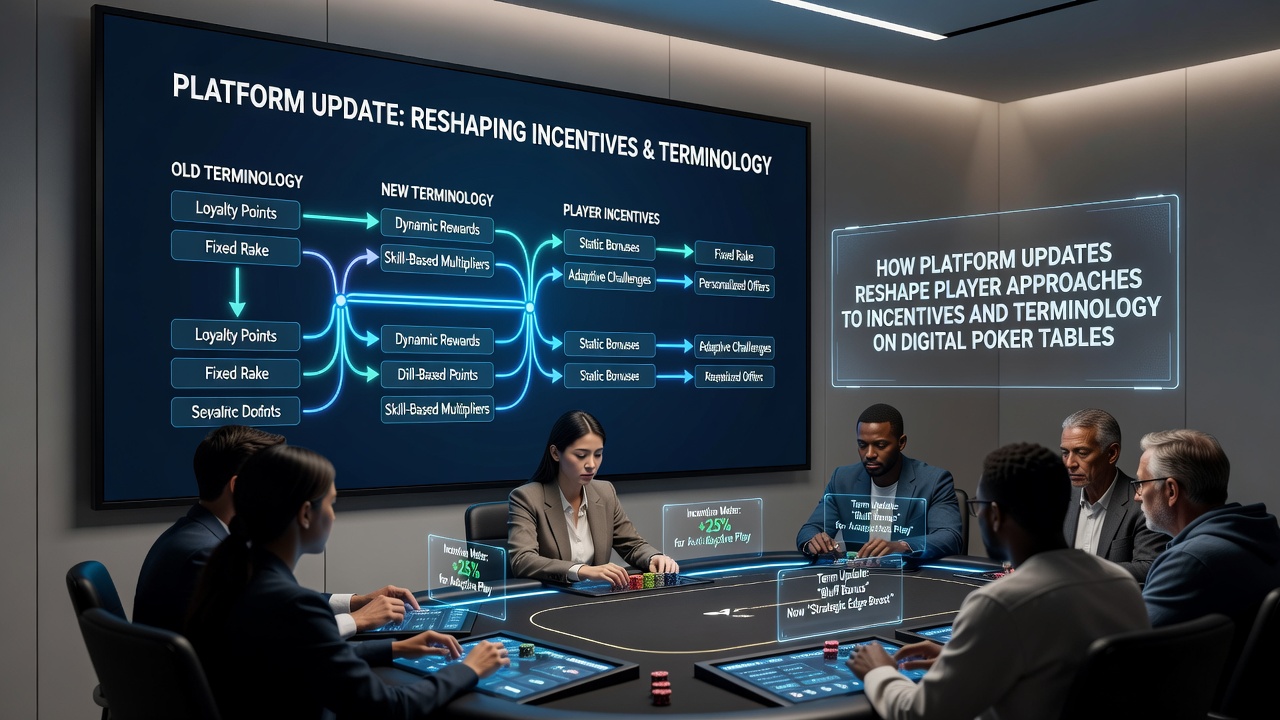
Many participants began using shorthand expressions derived directly from the platform interfaces when communicating in chat or on external forums. Terms such as "multiplier tier" and "session accrual rate" replaced older colloquialisms, creating a shared vocabulary that reflected the technical details of the updates. This linguistic convergence appeared most prominently among mid-stakes regulars who maintained detailed spreadsheets to monitor the revised bonus structures.
Terminology Evolution Across Digital Tables
Platform documentation released in October 2026 introduced standardized definitions for several previously ambiguous concepts, including "dynamic rake allocation" and "progressive incentive scaling." These clarifications prompted players to refine their decision-making processes when choosing between cash games and tournament formats. Industry reports indicate that the adoption of uniform terminology correlated with a 9 percent reduction in support queries related to promotional mechanics during the final quarter of the year.
Players who tracked these changes incorporated the new phrases into their strategic discussions, which facilitated quicker comparisons of offers across competing sites. Academic analyses from the University of Sydney's Gambling Research Centre found that consistent terminology helped reduce misinterpretation of bonus conditions, particularly among users who participated in multiple loyalty programs simultaneously.
Observable Patterns in October 2026 Activity
Traffic data collected during October 2026 demonstrated that tables featuring the most transparent incentive displays attracted higher volumes of returning players. The integration of tooltips that explained updated terminology in context encouraged participants to experiment with different stake levels without prior hesitation. External forums documented increased references to "accrual efficiency" and "tier progression speed" as players compared notes on the effectiveness of various platform revisions.
Operators that provided downloadable glossaries alongside their software updates saw faster uptake of the new language among their user bases. This development coincided with broader industry efforts to align promotional language with regulatory requirements in multiple jurisdictions, which further standardized how incentives were presented and discussed.
Conclusion
Platform updates continue to drive measurable changes in both incentive utilization and terminology adoption on digital poker tables. The data collected through 2026 illustrates how revised interfaces and standardized language influence player behavior across regions, with particular effects noted in Canadian markets where regulatory oversight tracks these developments closely. Continued monitoring of these patterns will provide further insight into long-term shifts in digital poker participation.